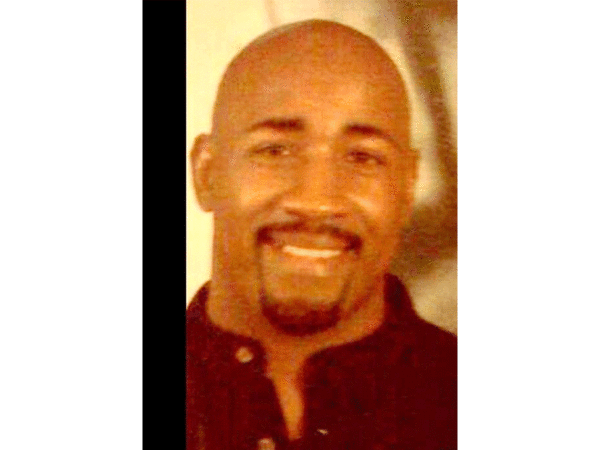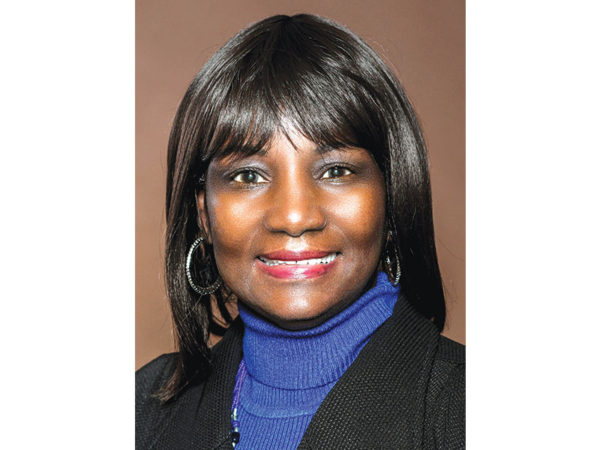
The historic Jimmy Andrews v. the City of Monroe, Louisiana case that led to the initial enrollment of Black students at Neville High School
“Segregation has no place in the American education system.”
— Richard Dawkins
According to reliable sources, the Monroe City School System is actively discussing significant rezoning changes that could possibly pave the way for Neville High School to become a charter school.
The first thing that comes to mind is that a couple of weeks ago, there was an article in The Monroe Free Press about how the Neville Charter Association was preparing to reintroduce its proposal to convert Neville High School into a charter school.
As I see it, it was by choice that white parents chose to withdraw their white children from public schools and enroll them into private, segregated schools in the first place.
Up until the Louisiana State Legislature’s refusal to allocate millions of dollars in funding for Governor Jeff Landry’s flagship program, the Louisiana Gator Scholarship Program, there had been very little discussion about a new rezoning plan for Monroe City Schools.
Now, however, rezoning discussions appear to be mainly centered on transferring Black students out of Sallie Humble, Lexington, and Neville to make room for white students whose parents are struggling to pay the high costs of private, segregated schools.
Black parents with children at Sallie Humble, Lexington, and Neville should be paying close attention to what the Neville Charter Association and other white organizations may be planning behind closed doors.
With that said, let me inform everyone about the 1969 court decree in Monroe, Louisiana.
On August 5, 1965, Jimmy Andrews and Tommy Robertson—through their mothers, Ms. Etta Mae Andrews and Ms. Odell Willis—filed a lawsuit against the City of Monroe, the mayor, and members of the Monroe City School Board. The lawsuit alleged racial segregation and discrimination in the operation of Monroe City Public Schools.
After months of deliberation, Judge Ben C. Dawkins Jr. issued a court order mandating desegregation. The ruling required an end to the bi-racial school system and ordered the city and parish districts to merge plans to integrate both students and staff.
One striking fact is that since Judge Dawkins’ original 1969 ruling, his consent decree has been modified at least twenty-two times over the past 55 years.
Finally, I would like to share what I consider to be the smoking gun behind the Neville Charter Association’s push to convert Neville High School into a charter school.
It turns out that charter schools in Louisiana can bypass traditional district mandates, including the 1969 desegregation court consent decree in Monroe. Because charter schools often operate under different state oversight rules and policies, they are allowed to sidestep older court-ordered desegregation plans and consent decrees.
In other words, Louisiana charter schools can claim public school status, receive public funding, and still operate in a manner that is highly segregated.
In closing, it is discouraging, to say the least, that many Black public elected officials and Black representatives in Monroe have chosen to remain silent instead of speaking out on critical issues—such as the Neville Charter Association’s attempt to bypass long-standing desegregation laws and consent decrees that have been in place for decades.