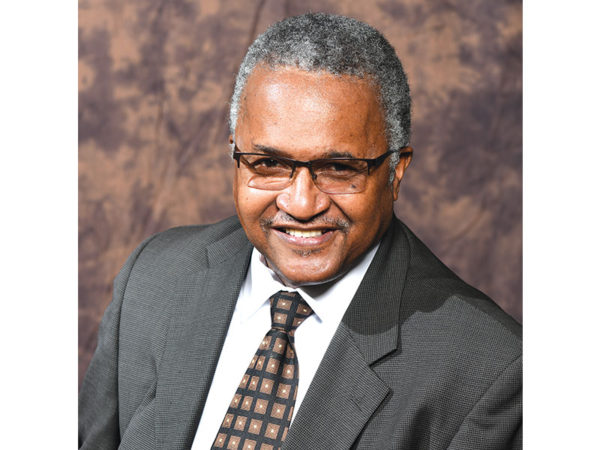
In 1979, the State of Louisiana convicted a 17-year-old Wossman High School student named Gerald Manning for the murder of Vonda Harris. The DA stacked the case against him, manipulated witness testimony, and set him up. He was wrongfully convicted, and thanks to outgoing DA Jerry Jones, the new DA Steve Tew, the Innocence Project. He was exonerated 40 years later.
He now works in public works for the city, thanks to Mayor Jamie Mayo, but the state of Louisiana gave him nothing for robbing him of 40 years of his life. In fact, he had to plead guilty to a “breaking and entering” which substituted for his murder charge and was given a fake 40-year service sentence to keep from paying him anything for the corrupt prosecution.
There are nearly 100 men in Louisiana who have been the victims of malicious prosecution, who have lost the productive years of their lives without even an “I’m sorry” from the state.
Nobody cares.
There was a bill in the legislature that intended to give such men a fighting chance to reclaim the rest of their lives, but Governor Jeff Landy vetoed it. It was HB125.
In vetoing legislation to increase compensation for the wrongfully convicted, Governor Jeff Landry chose to treat a moral obligation as a standard line-item veto. The decision to reject a cap increase for individuals cleared of crimes they did not commit—often after spending decades behind bars—replaces a commitment to justice with a spreadsheet calculation.
Louisiana holds one of the highest per-capita rates of wrongful convictions in the nation, with nearly 90 documented exonerations. For these individuals, the average time lost inside state penitentiaries is 18 years—double the national average. These are not statistical anomalies; they are decades of stolen liberty, missed family milestones, and destroyed lives, all resulting from errors and misconduct carried out under the authority of the state.
The governor’s veto message framed the decision around fiscal discipline, pointing out that the legislation’s true cost could approach $9 million over five years due to a backlog of 20 to 25 pending petitions. The message also contrasted this expenditure with the state’s inability to secure permanent raises for public school teachers.
This comparison creates a false choice. Funding public education and acknowledging the state’s liability for taking an innocent citizen’s freedom are not mutually exclusive priorities. To suggest that Louisiana can only afford to address one by ignoring the other minimizes the severe impact of state-sanctioned errors.
State payouts are designed to provide immediate, baseline support for individuals re-entering society with nothing.
When the justice system errs so profoundly that an innocent person is sent to prison, the state bears a direct responsibility to assist in their restoration.
By capping that responsibility based on short-term fiscal calculations, the state sends a message that the years lost by the wrongfully convicted are negotiable expenses rather than a profound debt of justice.