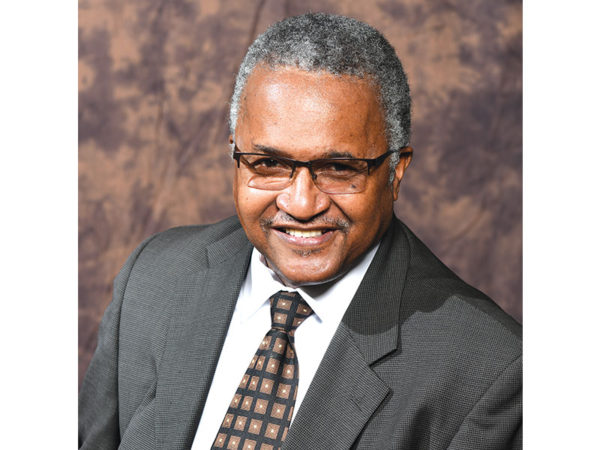
On January 19, 2021, the Monroe City School Board elected Darryl Berry as its president in a controversial vote questioned by most Black community leaders.
During the election, which was streamed live on YouTube, the public was allowed to comment on the item, but it’s attorney then wrongly told the first speaker that he could not give his opinion.
Unlike all other public bodies, school boards are required to allow public comment on every single agenda item before an actual vote is taken.
Before a vote on the new President, Rev. Ambrose Douzart, President of the N.A.A.C.P., rose to remind board members of Mr. Berry’s public record. Rev. Douzart said, “I come to speak on behalf of the people..we keep records. The records show that it is not in the best interest..”
Before he could say anything else, Board Attorney Doug Lawrence interrupted Rev. Douzart.
“We cannot make any comment about the character, competency or fitness of any individual without violating the Louisiana Open Meetings Law. So whether it is for or against..unless Mr. Berry says he waves his open meeting law rights and that It’s OK for that type of discussion to occur about him. If he says that, “fine.” If he doesn’t then nothing can be said about anybody’s character, competency or fitness,” Attorney Lawrence said.
In effect, the N.A.A.C.P. was shut down in bringing Berry’s public record to awareness of the board.
The problem with Lawrence’s unsolicited interpretation of the law is that it was completely wrong.
The law about public comment at school board meetings does not limit whether a person can speak in opposition or support of a person being considered for any position by the school board. That’s the whole purpose of the public comment requirement. Here’s what the actual words of the Louisiana revised statue say:
“Notwithstanding any other law to the contrary, each school board subject to the provisions of this Chapter, except as provided in Subsection B of this Section, shall allow public comment at any meeting of the school board prior to taking any vote. The comment period shall be for each agenda item and shall precede each agenda item.”
Lawrence erroneously told the school board that persons who speak for or against an individual being considered would violate the open meetings law, a claim that is not true.
The open meetings law requires a school board that is about to discuss the character or competency, or health of employee in an executive session that is closed to the public to notify the person and give them a chance to be present with the option to the hold that discussion in person if they desire.
That has absolutely nothing to do with whether or not a group such as the N.A.A.C.P. could speak to a school board member’s public voting record. Here are the exact words of the law which refers to what can be discussed in an executive session:
“Discussion of the character, professional competence, or physical or mental health of a person, provided that such person is notified in writing at least twenty-four hours, exclusive of Saturdays, Sundays, and legal holidays, before the scheduled time contained in the notice of the meeting at which such executive session is to take place and that such person may require that such discussion be held at an open meeting.”
Did the board’s attorney make a mistake, or was it intentional?
Attorney Lawrence has been the board’s attorney since dinosaurs crossed the land; there is no way he did not know the law’s correct interpretation. If he didn’t know, then he should resign. If he did know better, then the misinterpretation was intentional, which is irresponsible and reckless.
It had the effect of serving notice on anyone in the audience who wanted to speak that they could say whether they favored or opposed Berry, but they couldn’t explain why.
The school board relies on its attorney for sound legal advice when requested.
Last week’s advice was flat out wrong and may have contributed to Berry’s election.
Civic groups, Carroll Alumni, and the N.A.A.C.P. have been critical of Berry for failing to hold district meetings, return phone calls, or respond to community input.
Some were concerned Berry’s shady criminal past was not representative of the character of the board.
Berry has a reputation for taking bribes. In 2003 he was indicted by a grand jury on three counts of public bribery when he was a police jury member. In 2005 he took an “Alford plea,” which is a guilty plea without admitting guilt, and the charge was politically swept away.
In 2016, because of the passage of time, his right to hold office was restored.
He was never found not guilty of the bribery complaints.
Since Berry’s only income source was $900 a month as a school board member and occasional substitute teacher gigs, he was highly susceptible to financial persuasion.
School Board member Bill Willson made sizable personal contributions, according to campaign finance records, to Berry’s re-election campaign, and Willson also secured several four-figure donations for both Berry and black board member Sharon Neal.
Lawrence’s actions last week prevented Berry’s vulnerabilities from being revealed.
Willson is smiling. The puppeteer’s strings are hanging out of his pocket, and Berry makes an extra $100 a month for being president.